USACE and NAVFAC
ENG's quality control framework and safety program are built on the systems those commands require, including a designated QC manager and field leadership on site.

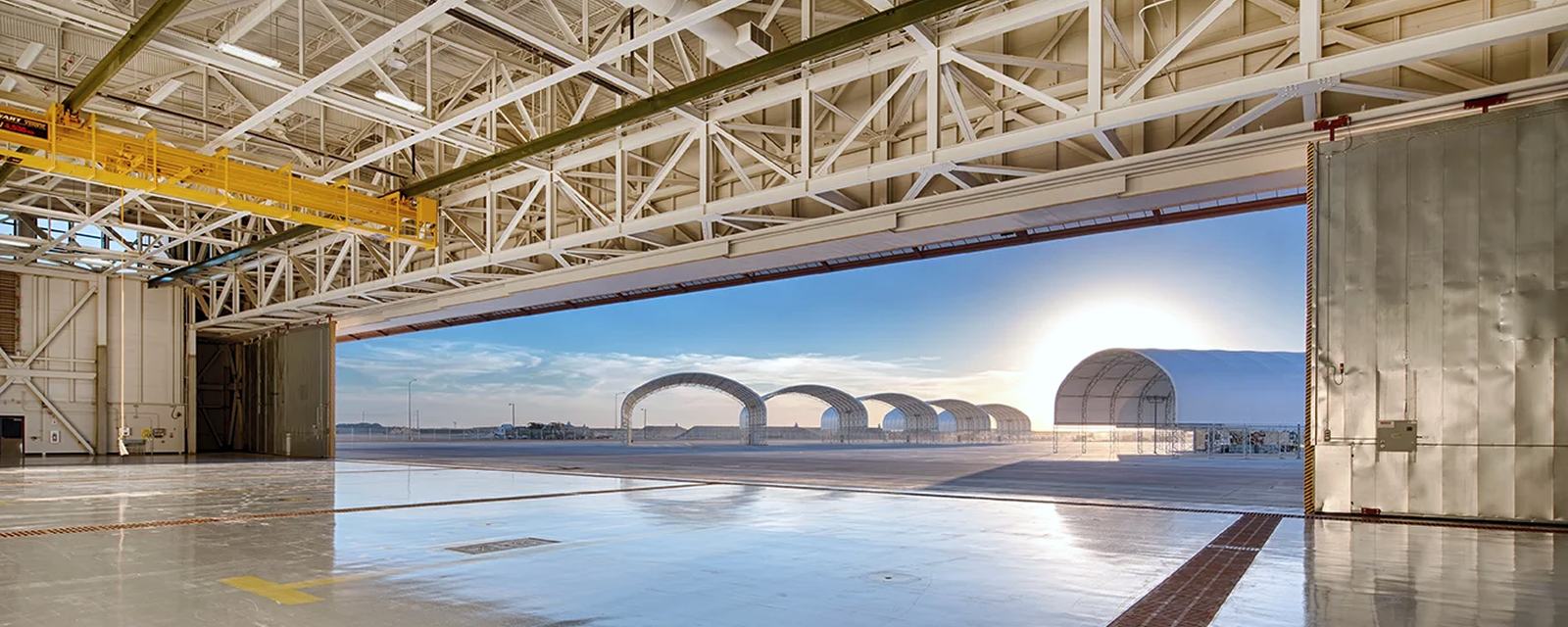
The defense environment runs on installations: cities in their own right, with thousands of buildings, most of them older than the people working in them, and a maintenance, repair, and renewal requirement that never stops. Texas hosts some of the largest, from Joint Base San Antonio and Fort Bliss to Fort Cavazos, the Air Force training bases, and the naval air stations on the coast.
Work on an installation is governed by requirements that do not exist elsewhere: EM 385-1-1 safety, three-phase quality control, installation access and vetting, escort rules, dig permits and utility clearances, antiterrorism and force protection standards, and coordination with installation engineering, safety, and fire departments on every outage and closure. ENG's safety program, quality control framework, and delivery model are written to those requirements as a matter of course.
ENG pursues defense facility work through the U.S. Army Corps of Engineers, NAVFAC, the Air Force Civil Engineer Center, Defense Logistics Agency, and installation contracting offices, and through the prime contractors that hold MATOC, MACC, SABER, and base operations contracts on those installations.
ENG's quality control framework and safety program are built on the systems those commands require, including a designated QC manager and field leadership on site.
SABER, JOC, facility support, and base operations functions with unit-price transparency and performance reporting against the contract's standards.
A veteran-owned Texas partner for MATOC, MACC, and base operations primes, carrying a defined scope under its own supervision.
ENG can serve this market as a prime contractor, a general contractor where the project calls for it, a subcontractor to a prime, or a teaming partner. How to contract with ENG.